
Drowning Risks for Offshore & Maritime Workers in the Gulf
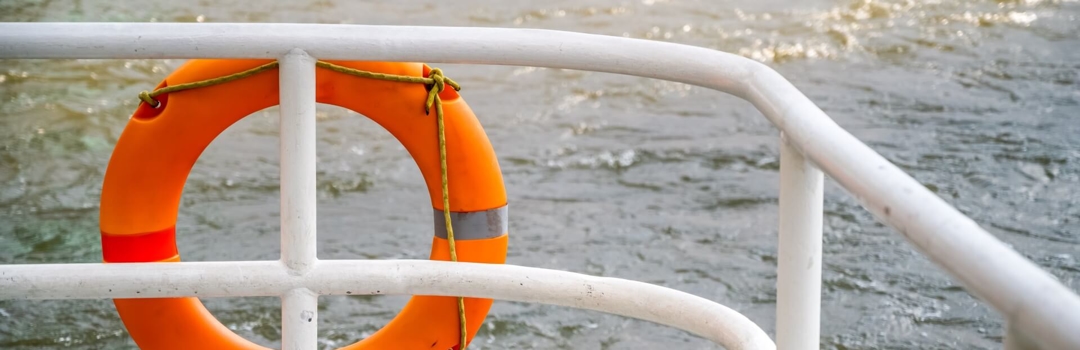
Work in the Gulf puts people on moving decks, platform edges, crew boats, barges, and docks, often within steps of open water. A slip, a capsizing, or a failed transfer can put a worker in the water in seconds. What happens next often depends on choices an employer made long before: whether lifejackets were required, whether anyone was watching, and whether rescue equipment worked.
Here’s well take a look at how often these events occur, which safety rules and laws apply, and what workers and families can do after a drowning or nonfatal drowning incident.
How Common Are Drownings in Maritime and Offshore Work?
No single federal database counts every drowning among maritime workers, so the picture comes from several sources.
The clearest federal data on falls overboard comes from commercial fishing. A CDC analysis found that 204 commercial fishermen died after falling overboard from 2000 to 2016, accounting for 27% of all work-related deaths in the industry. Of the 83 witnessed falls, 22 victims were pulled from the water but could not be revived. NIOSH researchers also found that none of the victims were wearing a personal flotation device. A separate NIOSH study covering 2000 to 2014 found that drowning was the cause of death for 99% of fatal falls overboard, and that slips, loss of balance, and entanglement in gear were the leading causes of the falls.
Offshore oil and gas workers face their own risks. A CDC report on offshore oil and gas fatalities from 2003 to 2010 counted 128 deaths, an average of 16 per year, and all but one occurred in Gulf operations. Transportation events caused 51% of those deaths. Although the report does not break out drowning as its own category, it notes that drowning and exposure are post-impact hazards that threaten survival after an accident.
Official counts may also understate the toll. Nearly half of the known offshore worker deaths in the Gulf from 2005 to 2019 did not fit the Bureau of Safety and Environmental Enforcement’s reporting criteria. The agency does not count deaths in state waters or deaths that occur while workers travel to offshore facilities.
Vessel casualties can put many workers in the water at once. In April 2021, the liftboat Seacor Power capsized in the Gulf after leaving Port Fourchon, Louisiana, bound for an offshore lease block. Of the 19 people aboard, six died, seven were missing and presumed dead, and six were rescued. The National Transportation Safety Board determined that the probable cause was a loss of stability when severe thunderstorm winds exceeded the vessel’s operating limits. The agency’s announcement of its findings also noted that no one aboard the Seacor Power, or aboard three other vessels lost in recent casualties, carried a personal locator beacon.
Waterfront work carries similar hazards. OSHA’s longshoring case summaries describe a longshoreman who fell into the water beside an unguarded edge while unhooking crane cables from a grain barge. He was not wearing a flotation device, and no life ring was available. In another fatal case aboard a barge and tugboat, OSHA found that the employer did not ensure life vests were worn, and 9 of the 11 flotation devices on site were defective.
What Safety Rules Apply?
For longshoring, OSHA requires employers to provide, and require workers to wear, personal flotation devices for any work in which an employee might fall into the water. The devices must be approved by the Coast Guard and kept in safe condition. Marine terminal work has a parallel requirement in 29 CFR 1917.95(b), and OSHA’s longshoring rules also call for life rings in 29 CFR 1918.97(e).
Seamen and offshore crews fall under a different mix of Coast Guard regulations and maritime law duties, including an employer’s obligation to provide a reasonably safe place to work and a seaworthy vessel.
Which Law Applies to a Drowning Claim?
The answer depends on the worker’s job, where the incident happened, and whether it involved a vessel or a fixed platform.
Seamen, including many offshore crew members, can sue their employers for negligence under the Jones Act, 46 U.S.C. § 30104. If a seaman dies from an injury, the personal representative can bring the claim. Seamen can also pursue unseaworthiness claims under general maritime law when equipment or conditions make a vessel unfit for its purpose, and they are owed maintenance and cure, meaning medical care and basic living expenses, regardless of fault. Missing life-saving equipment, inadequate watchkeeping, and sending a worker alone near open water are examples of conditions that may support these claims.
When a wrongful act, neglect, or default more than three nautical miles from shore causes a death, the personal representative may also have a claim under the Death on the High Seas Act, 46 U.S.C. §§ 30301 to 30308. DOHSA generally limits recovery to pecuniary losses, such as lost financial support, which is one reason the legal route a case takes matters.
Longshoremen, dock workers, and other covered harbor workers who are not seamen receive benefits under the Longshore and Harbor Workers’ Compensation Act without having to prove fault. When a work injury causes death, the Act pays reasonable funeral expenses up to $3,000 and weekly benefits to survivors, starting at 50% of the worker’s average wages for a surviving spouse, with additional amounts for children up to a combined cap of 66⅔% (33 U.S.C. § 909). Injured workers and survivors may still have claims against third parties, such as a vessel owner or equipment manufacturer.
Workers on fixed offshore platforms are often covered by the Outer Continental Shelf Lands Act. It extends LHWCA benefits to workers killed or injured in operations on the outer Continental Shelf (43 U.S.C. § 1333(b)) and applies the law of the adjacent state to claims arising on fixed platforms (43 U.S.C. § 1333(a)(2)(A)). That can change both the damages available and the filing deadlines.
Deadlines Matter
Most maritime injury and death claims under the Jones Act, DOHSA, and general maritime law must be filed within three years after the cause of action arose. The LHWCA is much stricter: injured workers must give written notice to the employer within 30 days, and claims for compensation, including survivor benefits, must be filed within one year (33 U.S.C. §§ 912 and 913). When the Outer Continental Shelf Lands Act applies, the adjacent state’s limitations period may be shorter than three years. Because the rules differ so much, families should not wait to get answers.
What to Do After a Drowning or Nonfatal Drowning
Medical organizations, including the American Red Cross, discourage terms like “near-drowning,” “dry drowning,” and “secondary drowning.” A person who survives a drowning incident has experienced a nonfatal drowning, which can range from no lasting harm to serious lung or brain injury. The Red Cross advises that anyone with respiratory symptoms after a drowning incident should seek medical care.
If you or a coworker survives a drowning incident, or if you are helping a family after a loss, these steps can protect health and legal rights:
- Get a full medical evaluation right away, even if the worker feels fine, and tell providers the worker was submerged. Coughing, trouble breathing, confusion, and unusual fatigue all deserve prompt attention.
- Report the incident to the employer in writing, and keep a copy.
- Write down what happened while memories are fresh, including the time, weather, equipment in use, and the names of witnesses.
- Preserve evidence, including photos, the flotation device or gear the worker used, and any messages about the work or conditions.
- Keep medical records, bills, and records of missed work.
- Speak with a maritime attorney before giving a recorded statement or signing any document from the employer or an insurer.
Families who have lost a loved one have their own rights. Depending on the worker’s job and where the death occurred, survivors may be able to pursue claims under the Jones Act, DOHSA, the LHWCA, or state law.
Preventable Risks, Real Accountability
Drowning is not an unavoidable part of offshore and maritime work. Life jackets, working with a partner, functioning rescue equipment, personal locator beacons, guarded edges, and realistic weather limits all reduce the odds that a fall becomes a fatality. When an employer skips those protections, workers and families should not be left to carry the cost.
If you have survived a drowning incident on the water or lost a family member who worked offshore or on the waterfront, you have legal options. An experienced maritime attorney can explain which laws apply and help you pursue the compensation you deserve.
Call (888) 346-5024 or contact us online for a free consultation.


