
When It Comes to Mooring Operations, Routine Doesn’t Mean Safe
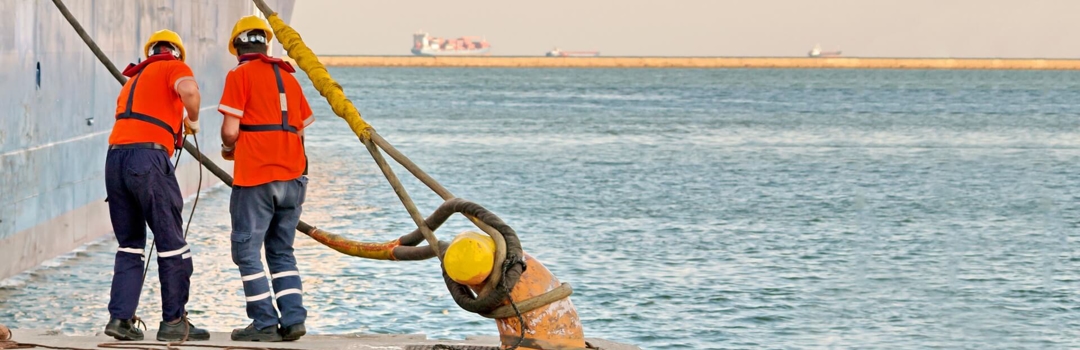
Every day in ports around the world, thousands of maritime workers perform what looks like one of the most routine tasks in their line of work: tying up vessels to docks and piers. These mooring operations may seem straightforward, almost mechanical, as workers handle thick ropes, operate winches, and secure lines to bollards. It’s a job many have done dozens or hundreds of times before.
But underneath all that routine is one of the most dangerous undertakings in the maritime industry. When things go wrong during mooring, they go catastrophically wrong. Workers can be crushed, dismembered, or killed instantly. Even experienced seafarers with decades at sea can be struck down in a fraction of a second.
During mooring operations, the line between a successful berthing and a tragedy can be measured in inches and milliseconds.
The Numbers Tell a Troubling Story
Maritime operators have known about the dangers of mooring since they first began, but the true scale of the problem has remained largely hidden from public view.
Recent data shows just how hazardous mooring can be:
- Between 2016 and 2021, the International Group of P&I Clubs was notified of 858 injuries and 31 fatalities during mooring operations.
- Studies show that 80-85% of maritime accidents are directly or indirectly caused by human error or unsafe behavior; mooring operations represent a significant portion of these incidents.
- Accidents during mooring operations are the seventh most frequent cause of personal injuries in maritime work, yet they rank as the third most expensive per claim due to their severity.
- A survey by the UK P&I Club found that 97% of ships had experienced a mooring incident onboard during the previous 24 months.
What Makes “Routine” Mooring Operations So Deadly
OSHA Mooring Fatality Incident Report: While unmooring a 500-foot vessel, a longshoreman was releasing the line at the vessel’s stern as another longshoreman released the line at the bow. The longshoreman at the stern was positioned near the edge of the dock on a mooring cleat that was in poor condition: the concrete was crumbling. As he removed the mooring line, he lost his footing and fell into the water. The longshoreman at the bow of the vessel ran to the stern and threw a life ring to his fellow crew member, but he slipped under the water and drowned.
Mooring dangers come from a deadly mix of factors: powerful forces from massive vessels, heavy equipment under extreme tension, crowded work areas, and constant pressure to work fast. When you add any sort of negligence into this mix, from delayed equipment maintenance to inadequate worker training, “routine” mooring operations quickly turn into scenes of catastrophic accidents.
Maritime workers face multiple hazards during mooring operations:
- Mooring line snap-back accidents occur when lines under tension suddenly break, releasing stored energy with explosive force. The broken ends recoil at high speed toward their attachment points on the vessel and the dock. Anyone in the path of this recoiling line faces the full force of that recoil, which may translate to traumatic amputation, crushing injuries, or being pushed overboard.
- Rope bight accidents happen when workers step inside the coil of a mooring line. If the line suddenly tightens while a worker is in the bight, they can be caught and crushed, dragged into equipment, or pulled overboard.
- Equipment failure involving winches, capstans, and bollards can cause lines to slip, jump off drums, jam, or surge with sudden tension. Workers operating or standing near this equipment risk being crushed or struck.
- Manual handling injuries result from the physical demands of mooring. Workers lifting heavy lines, maintaining awkward postures while securing lines under load, and performing repetitive motions may suffer back injuries, muscle strains, hernias, and chronic pain.
- Slips, trips, and falls are constant hazards on wet, cluttered decks and docks. Workers may slip and fall on deck, fall against equipment, or fall overboard. In cold weather or rough seas, the risks of cold shock, hypothermia, and drowning are very real.
The Snap-Back Zone
Of all mooring hazards, snap-back accidents are the most feared, and with good reason. When a tense mooring line breaks, the stored energy is released in a split second. The physics are terrifying: a rope weighing hundreds of pounds that's stretched under tension suddenly contracts, accelerating both broken ends toward their attachment points at speeds of over 500 mph—and enough force to cut through metal, concrete, or any person in its path.
The snap-back zone usually extends along the path between the winch or fairlead and the shore bollard, but where the line actually goes when it snaps can be unpredictable. Depending on the type, length, and material of the line, this danger zone can extend across wide areas of the deck and dock. Workers who stand in this zone, even for a moment, are at serious risk.
The injuries from snap-back accidents are particularly severe:
- Head and facial trauma from direct strikes
- Spinal injuries resulting in paralysis
- Amputations of limbs caught or struck by the line
- Crushing injuries to the chest and torso
- Multiple fractures throughout the body
- Severe lacerations requiring extensive reconstructive surgery
Why Do Mooring Lines Fail?
Like any maritime accident, mooring line failures can be traced to specific causes. These, in turn, can be traced to instances of negligence, safety failures, and decisions to put profits or production over worker safety.
Material degradation may happen gradually through UV exposure, chemical contamination, and saltwater. Synthetic fiber ropes deteriorate from the inside out, making damage hard to spot during a visual inspection.
Improper storage speeds up deterioration. When lines are stored wet, exposed to sunlight, or touching chemicals, they will break down faster than when they are properly stored and maintained.
Overloading beyond rated capacity occurs when vessels berth in strong winds or currents, when not enough lines are used, or when winches apply too much tension to a line. Every type of line has a breaking point; going past that guarantees failure.
Sharp edges and friction points can create weak spots. Mooring lines that pass over damaged fairleads, rough bollards, or deck edges develop problem areas and may experience eventual or immediate failure.
Inadequate inspections allow damaged lines to stay in service. Too many mooring accidents have involved lines that showed clear signs of wear (fraying, worn areas, or deformation) but were used anyway.
Exceeding service life limits set forth by manufacturers can result in the failure of any mooring line, no matter how well-maintained it may be. No worker should pay the price for a failure to replace aging lines.
Improper splicing and end fittings create weak points in the mooring system, leading to potential snap-back incidents and other mooring line failures.
When the Pressure to Work Fast Puts Safety on the Back Burner
Modern shipping runs on tight schedules where every minute counts. Vessels need to berth quickly to start cargo operations. Terminal operators push for fast turnarounds. Crews feel the weight of expectations to complete mooring efficiently.
Unfortunately, this urgency can show up in dangerous ways:
- Not enough crew assigned to mooring operations
- Cutting short or skipping pre-mooring safety briefings
- Insufficient or skipped equipment checks
- Mooring in severe sea or weather conditions
The worst part is that these safety violations can become standard practice. The first time a crew moors with fewer people than required and nothing goes wrong, the shortcut becomes acceptable. After dozens of successful mooring operations with too little crew, it becomes “the way we do it.” Until the day something goes wrong.
Who’s Liable When Mooring Goes Wrong
When mooring accidents cause injury or death, multiple parties may share liability. Vessel owners may face liability under the Jones Act and general maritime law. The Jones Act gives injured seamen the right to sue their employers for negligence. If a vessel owner knew or should have known about dangerous conditions like worn mooring lines or insufficient crew and failed to fix them, they may be liable for resulting injuries.
Unseaworthiness claims may provide another way to recover damages. Vessels must be reasonably fit for their intended purpose, including having properly maintained mooring equipment. When defective equipment, too few crew, or dangerous conditions make a vessel unseaworthy, injured seamen can seek damages regardless of specific negligence.
Terminal operators may be liable when dockside conditions contribute to mooring accidents. Damaged bollards, poor lighting, blocked work areas, or failures to provide enough shore personnel are examples.
Manufacturers may also face liability if defective mooring equipment causes accidents. Lines that fail early, poorly designed winches, or bollards that break under loads they are rated to handle may give rise to product liability claims.
Benefits for Land-Based Workers Injured in Mooring Operations
The Longshore and Harbor Workers’ Compensation Act (LHWCA) covers land-based workers involved in mooring operations. This includes longshoremen, dock workers, and other shore-based personnel who do not qualify as seamen under the Jones Act. Similar to workers’ compensation, the LHWCA provides benefits without needing to prove employer fault, but these may be limited. Injured workers may be able to pursue third-party claims against other parties who were responsible for a mooring accident, such as a vessel owner or manufacturer.
Preventing Mooring Accidents
Detailed guidelines exist for safe mooring operations, but these must actually be implemented to be effective. Terminal operators, vessel owners, manufacturers, and all maritime companies involved in mooring operations must take appropriate measures for the safety of their crews.
This includes:
- Adequate staffing
- Regular equipment inspection
- Clearly marked snap-back zones
- Mandatory pre-mooring safety briefings
- Appropriate personal protective equipment (PPE)
- Comprehensive training programs
- Adequate lighting
- Clear communication systems
- Established weather limits
Technological solutions like automated mooring systems, remote winch operation, tension monitoring systems, and synthetic lines with improved snap-back characteristics can take things further by reducing human exposure to hazards. However, technology should only supplement—not replace—proper procedures and training.
Every seaman, harbor worker, and longshoreman deserves to return home safely. Every mooring operation can and should be conducted without injury. Achieving this goal requires commitment from every level of the industry, as the real cost of treating mooring operations as "routine" is measured not in dollars, but in lives destroyed, families shattered, and communities devastated by tragedies that should have been prevented.


